
Make energy a lever for higher Net Operating Income.
NOI finds where utility spend, peak demand and operating risk are weighing on a property’s NOI. For qualifying sites, we structure the capital, coordinate licensed delivery partners, and remain accountable for the solar and battery operating case.
No-cost 30-minute commercial review · No utility bill required to start
For qualifying commercial properties. Every case depends on the tariff, load, site, ownership structure and project agreement.
See your modeled number before you talk to anyone.
Attach a utility bill or enter five numbers — get a modeled solar + storage fit with dollars, labeled as modeled.
See how NOI turns energy data into an operating asset.
Energy reaches NOI in three places.
Lower controllable operating expense
We start with the tariff and measured load to identify which utility-cost components may be reduced through solar, storage or operating changes.
Capture eligible energy value
Where programs, tariffs and ownership support it, state programs pay commercial batteries per kW of measured dispatch — in Connecticut, $325/kW-yr for years 1–5 under Energy Storage Solutions (verified August 2026, program manual) — modeled separately from bill savings.
Protect operating performance
Monitoring, dispatch, maintenance coordination and resilience planning help protect the operating case after the energy asset is commissioned.
The treatment of savings, payments and resilience depends on leases, recoveries, accounting, program rules and the executed agreement.
Built for the buildings that spike.
The load shape decides, not the property label: one owner-paid commercial meter, a spiky load, 20–500 kW, and a live program in your state.
Multifamily & communities
Garden apartments, BTR, HOA and condo associations — clubhouse, pool, gatehouse and EV charging on owner-paid meters.
See multifamily energy storageMunicipal & district facilities
Fire and ambulance districts, water districts, town buildings — pumps and apparatus bays that set the billed peak.
Get a free tariff readFaith, school & non-profit
Congregations, schools and non-profits — federal direct-pay rules can make energy credits usable for tax-exempt owners; we evaluate eligibility per project.
Get a free tariff readDemand-heavy commercial
Hotels, senior living, climate-controlled self-storage, light industrial, cold storage — refrigeration and HVAC spikes that price the month.
Get a free tariff readA short operating peak can affect a full month of demand charges.
On commercial tariffs with billed-demand charges, a short interval of high load may materially affect that month’s utility cost. A correctly sized and operated battery may reduce the peak recorded by the utility. Whether that value reaches property NOI depends on the tariff, dispatch performance, leases and expense recoveries.
See the full battery-storage caseWithout storage dispatch
A short load spike creates the highest metered interval in this illustrative billing period.
Illustrative billed peak · 470 kW
With modeled storage dispatch
The modeled control strategy attempts to reduce qualifying peaks within the battery’s power, energy and state-of-charge constraints.
Illustrative billed peak · 320 kW
150 kW lower modeled peak in this example
We underwrite the property before we specify the equipment.
A battery or solar array is not automatically an NOI strategy. The tariff must contain an addressable cost, the site must support the asset, the capital structure must fit the owner’s plan, and the operating case must survive realistic assumptions. If those conditions do not hold, we say so before design work begins.
The underwriting method- 01Tariff and meter before technology
- 02Property constraints before equipment selection
- 03Savings separated from eligible payments
- 04Assumptions and sensitivities stated in writing
The NOI case does not end at installation.
NOI connects the parts that usually sit with separate vendors: property underwriting, capital coordination, licensed delivery, interconnection, monitoring, dispatch, maintenance coordination and program reporting. The licensed installer performs the construction. NOI remains accountable for the operating case defined in the agreement.
- 01Analyze
- 02Structure
- 03Coordinate delivery
- 04Operate
- 05Report
- Reporting period
- Monthly
- Asset status
- Online
- Data source
- Sample view
- Comparison basis
- Approved in agreement
- Consumed on-site
- 486 kWh
- solar used by the building
- Sold to grid
- 168 kWh · $53.80
- surplus exported
- Self-sufficiency
- 81%
- of load met on site
- Grid sales + dispatch$31,180
- Demand savings$12,410
- Program payments + RECs$34,822
Paid to the property directly by the utility and program administrators. NOI reconciles every line.
- Avoided utility expenseModeled
- +Eligible program paymentsPaid
- −Owner-paid energy-service or operating costsUtility invoiced
- =Modeled property operating impactModeled
Accounting, lease recoveries, ownership and the project agreement determine what reaches reported property NOI.
Specialists deliver the equipment. NOI keeps the property case connected.
NOI works with licensed EPCs, engineers, technology manufacturers and commercial capital providers. Each project names who is responsible for engineering, installation, equipment, financing and operations.
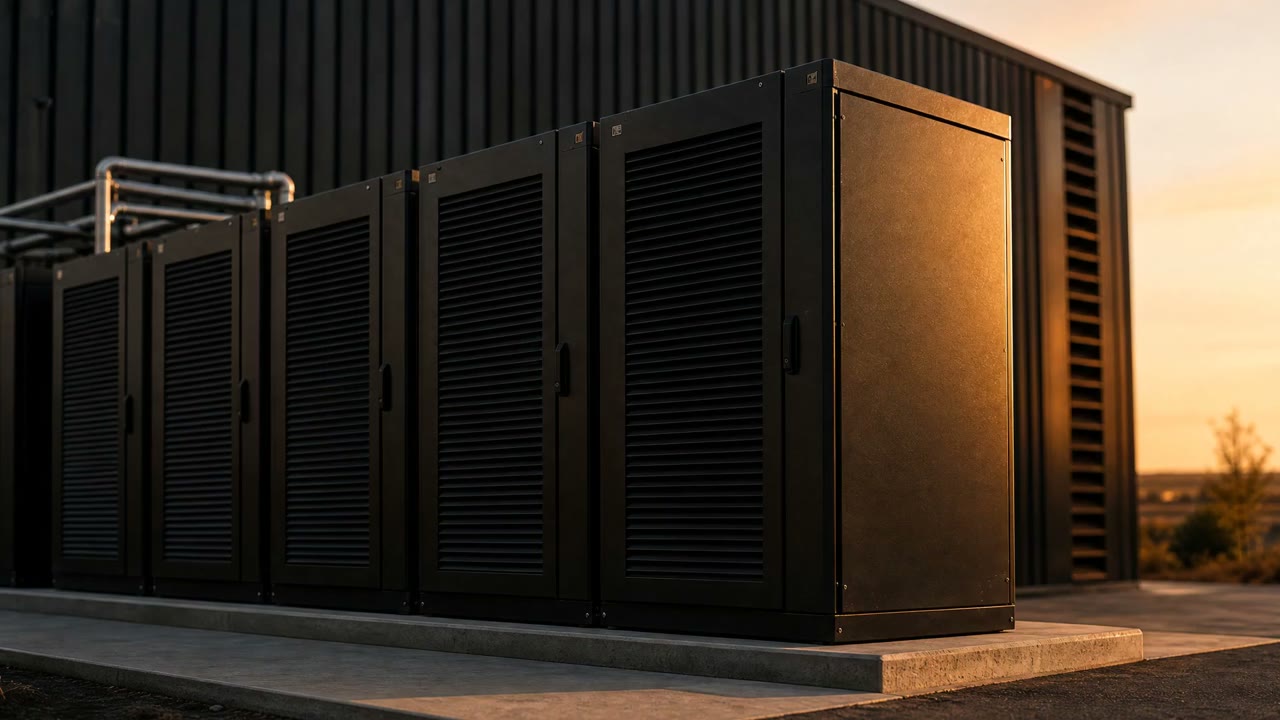
Commercial and community-scale battery equipment
Modular LFP storage equipment
Swedish-engineered commercial storage equipment
Manufacturer names indicate approved equipment, not an endorsement of NOI by the manufacturer or participation in a specific project.
The delivery networkWho reviews your bill
A named team, not a queue — your tariff read comes from the people who underwrite the projects.





Find where energy can strengthen your property’s NOI.
Send one recent utility bill. We will identify the addressable cost structure, the information still needed, and whether the property deserves deeper engineering.