
Reduce the demand peaks that can erode property NOI.
A battery belongs in the property plan only when the tariff, load shape, site and operating constraints support it. NOI builds that case from measured property data, coordinates delivery for qualifying projects, and manages the operating strategy defined in the agreement.
- Demand without storage (kW)
- Demand with NOI storage (kW)
- Solar generation (kW)
- Utility rate ($/kWh)

Demand peaks can affect NOI differently from energy consumption.
Energy charges
Billed per kWh consumed over the period. This is the cumulative cost of everything the building runs, and it scales with total consumption and, on time-of-use tariffs, with when that consumption happens.
Demand charges
Billed against the single highest interval of power draw during the billing period — one spike sets the price for the whole month on that line item. A battery that discharges into that interval reduces what the utility records, regardless of what the rest of the month looked like.
Without storage dispatch
A short load spike creates the highest metered interval in this illustrative billing period.
Illustrative billed peak · 470 kW
With modeled storage dispatch
The modeled control strategy attempts to reduce qualifying peaks within the battery’s power, energy and state-of-charge constraints.
Illustrative billed peak · 320 kW
150 kW lower modeled peak in this example
Savings, program value and resilience are separate lines.
Demand charge reduction
Discharging into a building's peak interval lowers what the utility bills for demand. The size of the reduction depends on battery capacity relative to load, dispatch strategy, and the applicable tariff's demand structure.
Time-of-use arbitrage
Where a tariff prices off-peak and on-peak energy differently, charging during low-cost windows and discharging during high-cost windows can offset energy charges. Applicability depends on the tariff and rate spread.
Program participation
Where a state or utility program pays for measured dispatch, an enrolled energy asset can earn performance payments as eligible program income. Eligibility, payment structure and program terms vary by state and utility and are not guaranteed to exist everywhere.
NOI stays accountable after commissioning.
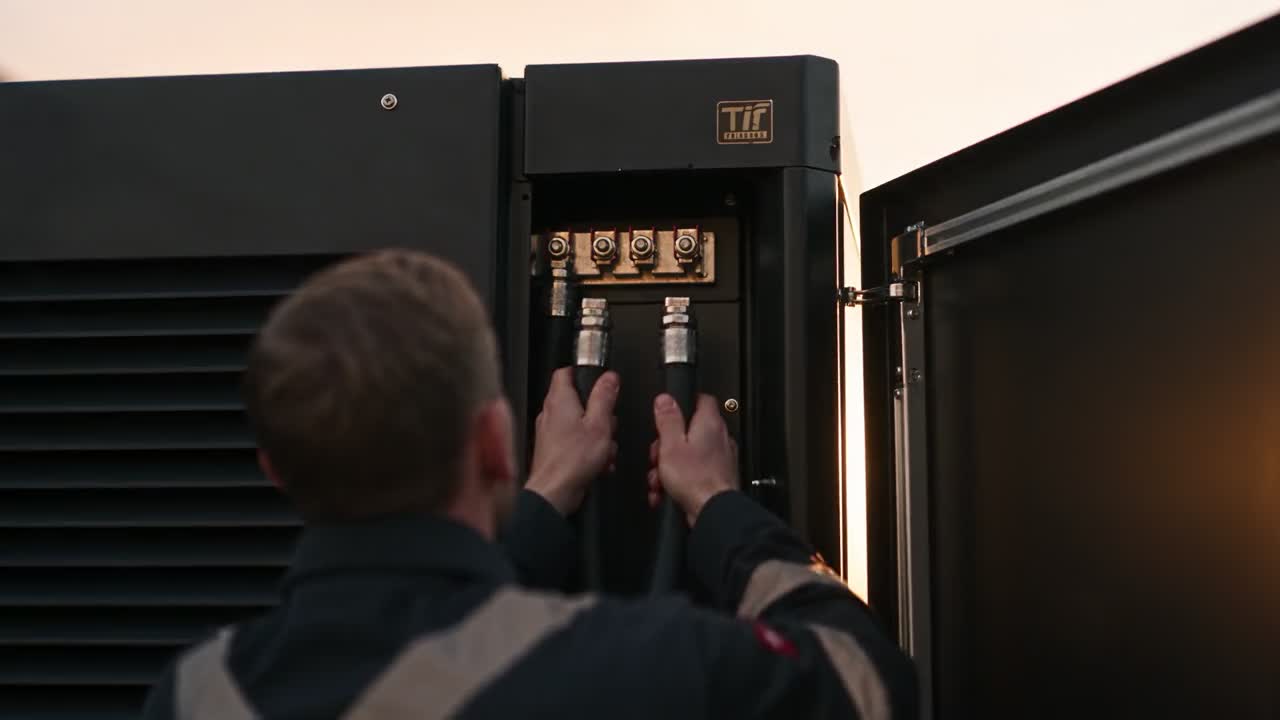
For qualifying projects, NOI coordinates capital and financing, manages permitting and interconnection with licensed delivery partners, and operates the energy asset once it's live — monitoring performance against the building's load profile, dispatching against the tariff, and handling enrollment, event participation and reporting for any program the property qualifies for. Bill savings, eligible program income, and resilience benefit remain separate lines in the case.
 Hover to play
The battery case must survive the property model.
- —Utility and rate tariff, including whether demand charges and time-of-use pricing apply
- —Historical load profile and peak demand pattern
- —Available roof, ground or pad space and electrical service capacity
- —State or utility storage program availability and eligibility rules where they exist
- —Interconnection requirements specific to the utility territory
- —Ownership structure and site control
Connecticut's Energy Storage Solutions program
Connecticut's Energy Storage Solutions program pays enrolled commercial batteries performance incentives for measured dispatch during utility-called events, rather than an upfront rebate. Rates, tiers and event structure are set by the program administrator and are subject to change. This information describes Connecticut only and should not be assumed to apply to any other state or utility territory.
Source: Connecticut Energy Storage Solutions Program Manual, administered under PURA oversight. Verify current tiers, rates and eligibility directly with the program administrator before relying on any figure — terms are periodically revised.
Solar and storage are treated differently under federal tax law.
Solar and storage have different federal credit deadlines. Qualifying solar that begins construction after July 4, 2026 generally must be placed in service by December 31, 2027. Storage follows separate rules. Projects that began construction earlier must meet the continuity requirements. Eligible equipment and sourcing requirements also apply, so credit value depends on the project, its ownership, its construction dates and the eligibility requirements it meets. This is general information, not tax advice — confirm current law and your project's specific eligibility with a qualified tax professional before relying on any credit. Primary source: IRS, Clean Electricity Investment Credit.
Share your utility tariff and load profile, and we'll tell you what's actually achievable at your property.
What owners ask about storage.
Demand charges, dispatch, eligibility, and how program participation works.
What's the difference between a demand charge and an energy charge?
+
Most commercial utility bills combine two separate charges: energy charges (priced per kWh consumed over the billing period) and demand charges (priced against the single highest interval of power draw, measured in kW, during that period). Demand charges are billed off one peak, not average usage, and the exact share of the bill they represent varies by utility, tariff and building load pattern — there is no single percentage that applies across properties.
How does a battery reduce demand charges?
+
A properly sized battery discharges during periods when a building's load is approaching its historical or forecast peak, reducing the recorded interval that the utility bills against. The size of the reduction depends on the battery's capacity relative to the load profile, how it is dispatched, and the specific demand-charge structure of the applicable tariff.
Where do battery storage economics come from?
+
Three sources, layered: reduction in utility demand charges, the spread between off-peak and on-peak energy rates where time-of-use arbitrage applies, and — where a property is eligible — payments from state or utility performance programs for measured dispatch. Each of these depends on utility, tariff, load profile and program rules at the specific site.
Who operates the battery once it's installed?
+
NOI. That includes monitoring the system, dispatching it against the load profile and tariff, maintaining performance, and — for properties enrolled in a utility or state program — handling enrollment, event participation and reporting.
Does eligibility depend on my state?
+
Yes. Utility tariff structure, demand-charge design, interconnection rules and the existence (or absence) of a storage performance program all vary by state and utility. The program details on this page are specific to Connecticut and should not be assumed to apply elsewhere.
More questions? Read the full FAQ or talk to us.