
Neighborhood retail plaza — storage only
Cranston, Rhode Island · Neighborhood retail plaza, grocery anchor · 300 kW / 600 kWh storage, no solar
A storage-only case. The roof was too new to touch and largely occupied by refrigeration equipment, but the anchor tenant's compressors create a sharp, repeatable afternoon peak — which is exactly what a battery is for.
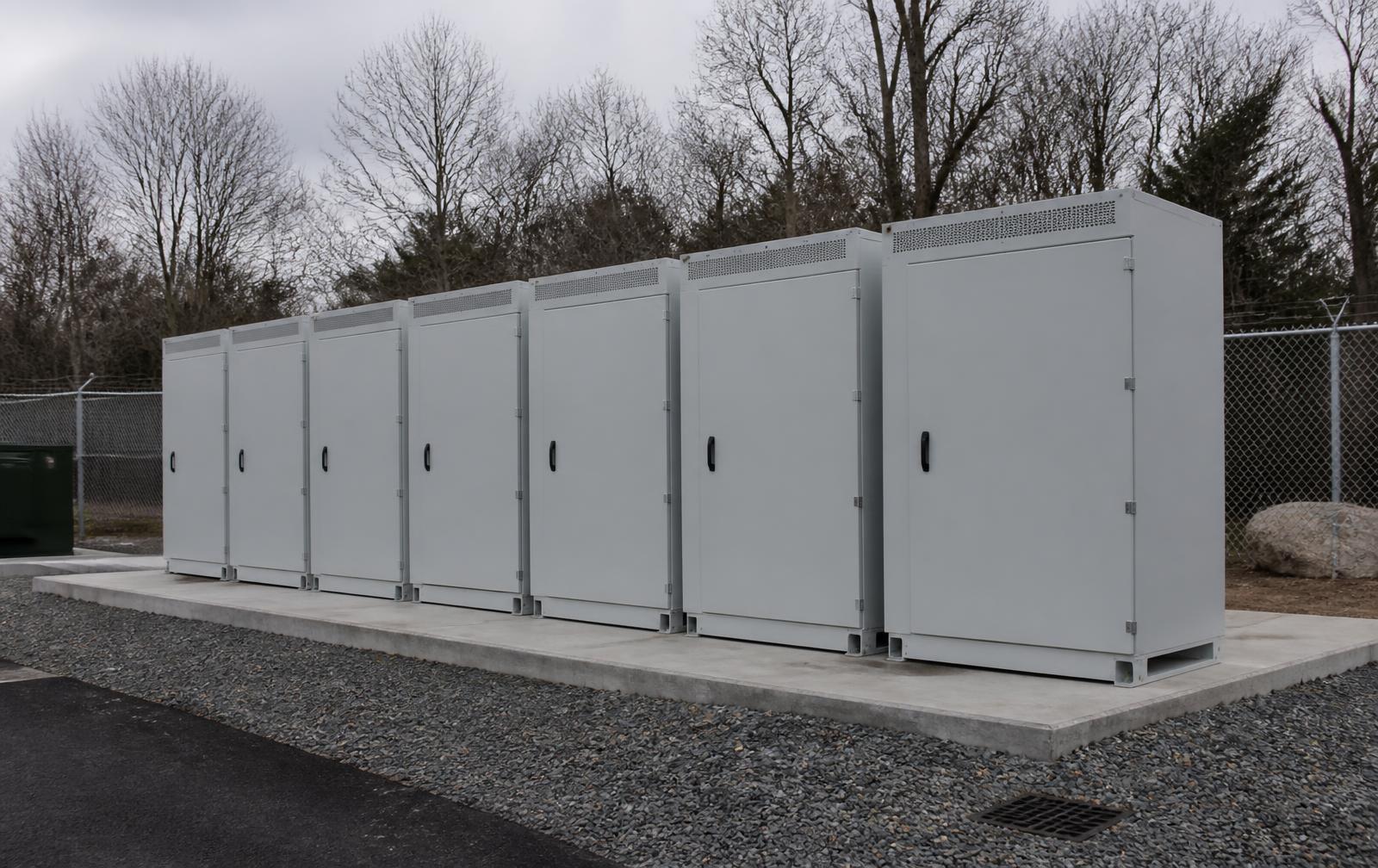
Representative photography of this site type. Not a photograph of a customer property.
- Modeled annual benefit
- $45,000
- Sum of the supported lines below only. Program performance value is excluded because it settles on measured dispatch.
- Demand charges today
- $95,400 / yr
- 530 kW billed peak at $15/kW-month.
- Solar
- Not in scope
- See the design notes for why the array was deferred.
- Rhode Island Energy general-service demand rate with a billed-demand determinant near $15/kW.
- Demand charges are the largest single controllable line on the bill.
- A time differential exists but is too narrow to carry the case on arbitrage alone.
- Roof replaced two years ago and substantially occupied by refrigeration and rooftop units — solar deferred, not rejected.
- Rear service yard with pad space, screening and clear fire access for the storage enclosures.
- Existing switchgear accepted a 300 kW inverter block without a service upgrade.
- Dispatch driven by the anchor tenant's compressor cycling profile from interval data.
- 300 kW / 600 kWh storage — 57% of the 530 kW billed peak at a two-hour duration.
- Conduit and structural provisions left in place so solar can be added at the next roof cycle.
Cranston, Rhode Island: modeled annual economics, line by line
| Line | Modeled value | Basis |
|---|---|---|
| Energy offset from solar | $0 | No array in this scope. |
| Demand-charge reduction | $45,000 / yr | 300 kW cleared in 10 of 12 months at $15/kW-month. |
| Program performance payments | Not modeled | Not modeled as a dollar figure. Performance programs of this type settle on measured dispatch during declared events, so a nameplate figure would overstate the receipt. Eligibility, enrolment and settlement basis are confirmed per site before any case is issued. |
Modeled figures only. Not an operating result, not customer data, not a quote. Federal, state and utility incentive availability depends on project facts and applicable requirements; NOI does not provide tax advice.
- The case depends on the anchor tenant's load; a tenant change or an equipment retrofit changes the peak profile.
- Program eligibility, settlement basis and rates are verified per site; no program receipt is modeled above.
- Enclosure siting is subject to fire-code review, which can move the pad and the cost.
- 01 Tariff read
Rate schedule, demand determinants, and interval data from the utility.
- 02 Site validation
Switchgear capacity, pad siting, fire access and screening requirements.
- 03 Design and underwriting
Dispatch modeling against the measured peak, then financing underwriting.
- 04 Permitting and interconnection
Fire-code review, city permitting, utility interconnection approval.
- 05 Operations
Automated dispatch, monthly demand verification, maintenance and reporting.
Get a free energy assessment for your Rhode Island property
Send the address, and a utility bill if you have one. A written read of your tariff within 2 business days, free, including when the answer is no.